
How do dental X-rays work, and are they safe? If you are looking for a dentist in SW Edmonton, digital X-rays can give clear pictures of your teeth and gums to find cavities, infections, and other problems. Learning about how these X-rays work can help you feel more comfortable and understand why they are important for keeping your teeth healthy.
What are Digital Dental X-Rays?
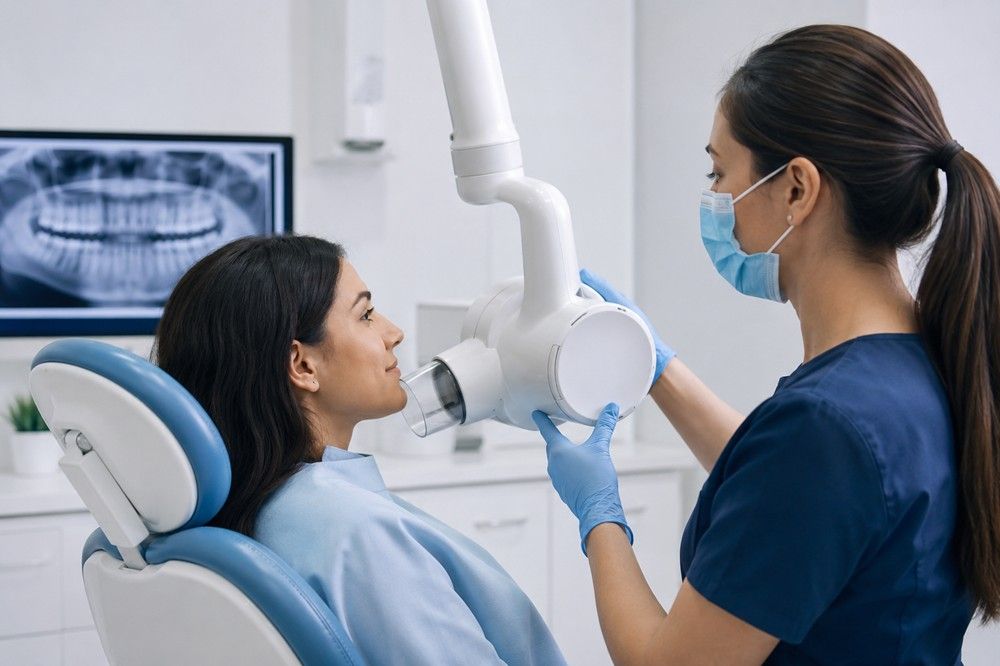
Digital dental x-rays use electronic sensors to capture images of your teeth, gums, and jaw. Unlike traditional film x-rays, digital x-rays produce instant images on a computer screen, allowing dentists to identify problems quickly.
- Images are clearer and can be adjusted for better detail.
- Results are available immediately.
- Less invasive and more comfortable than traditional X-ray film
These X-rays are widely used in dental clinics to monitor oral health and plan treatments efficiently.
Do Dental X-Rays Hurt?
Many patients ask, “Do dental X-rays hurt?” The good news is that digital dental X-rays are painless. You may feel slight pressure when the sensor is placed in your mouth, but there is no actual pain.
- A small sensor or plate is placed in the mouth for a few seconds.
- Slight pressure may occur, but it is brief.
- No discomfort from radiation or image capture
This makes digital X-rays suitable for patients of all ages, including children and seniors.
Understanding Digital Dental X-Ray Safety
Digital X-rays are very safe and use much less radiation than regular X-rays. Dentists also use protective gear like lead aprons and collars to keep you safe.
- The small amount of radiation is safe for regular checkups.
- Protective gear shields sensitive areas.
- Dentists follow strict rules to keep risks very low.
Because of these safety steps, digital X-rays can be used often and are an important part of keeping your teeth healthy.
How Much Radiation is Involved?
Many people worry about radiation from dental X-rays. Digital X-rays give very little radiation, much less than what you get from natural background radiation.
- One small digital X-ray is about the same as one day of natural radiation.
- Even a full set of digital X-rays gives much less radiation than older film X-rays.
- The risk is very low when done by a trained dentist.
This low exposure helps patients maintain oral health without unnecessary worry about radiation.
Benefits of Digital X-Rays
Digital X-rays have many benefits compared to regular X-rays, making them safer, faster, and better.
- You get the images right away for quick diagnosis.
- The pictures are clear, helping dentists find small cavities or hidden problems.
- They use less radiation than regular X-rays.
- They are better for the environment because no chemicals are used.
These reasons make digital X-rays an important part of modern dental care.
When Digital X-Rays are Recommended
Dentists may use digital X-rays near you during regular checkups or if they think there is a problem. They are helpful for:
- Looking for cavities between teeth
- Checking tooth roots or the jawbone
- Watching for bone loss from gum disease
- Planning treatments like implants or braces
Regular digital X-rays help find problems early so that you may avoid bigger treatments later.
Tips for Patients
Digital X-rays are safe, and you can do a few things to feel more comfortable:
- Tell your dentist if you are pregnant or have health problems.
- Stay still while the X-ray is taken.
- Ask questions if you feel nervous.
- Remember that protective gear is always used.
Knowing what will happen helps you stay calm and makes the X-ray easier.
Experience Safe and Comfortable Dental Imaging!
Digital dental x-rays provide a quick, pain-free, and highly accurate way to keep your smile healthy. With very minimal dental X-ray radiation risk and instant, clear results, they are essential for spotting problems early and protecting your oral health.
Take the step toward smarter dental care, book your visit at Rabbit Hill Dental Choice today and enjoy modern imaging that keeps your teeth and gums strong, healthy, and confidently bright!
📍Find us easily on Google Map.
FAQs
How often should I get dental X-rays?
The frequency of dental X-rays depends on your overall oral health and risk factors. Most patients benefit from X-rays every 1–2 years, but if your dentist suspects cavities, infections, or other dental issues, they may recommend them more often.
Can X-rays find hidden dental problems?
Yes, digital X-rays can show cavities, tooth infections, bone loss, and other problems that you might not see in a regular checkup. Finding these early helps prevent bigger issues later.
What is the difference between digital and regular X-rays?
Digital X-rays give clearer pictures faster and use much less radiation than regular film X-rays. The images show up on a computer right away, so dentists can find problems and plan treatment more quickly.
Is there any discomfort during digital X-rays?
Digital X-rays are generally painless. You may feel slight pressure when the sensors or plates are positioned in your mouth, but the process is very quick, comfortable, and does not cause lasting discomfort.